


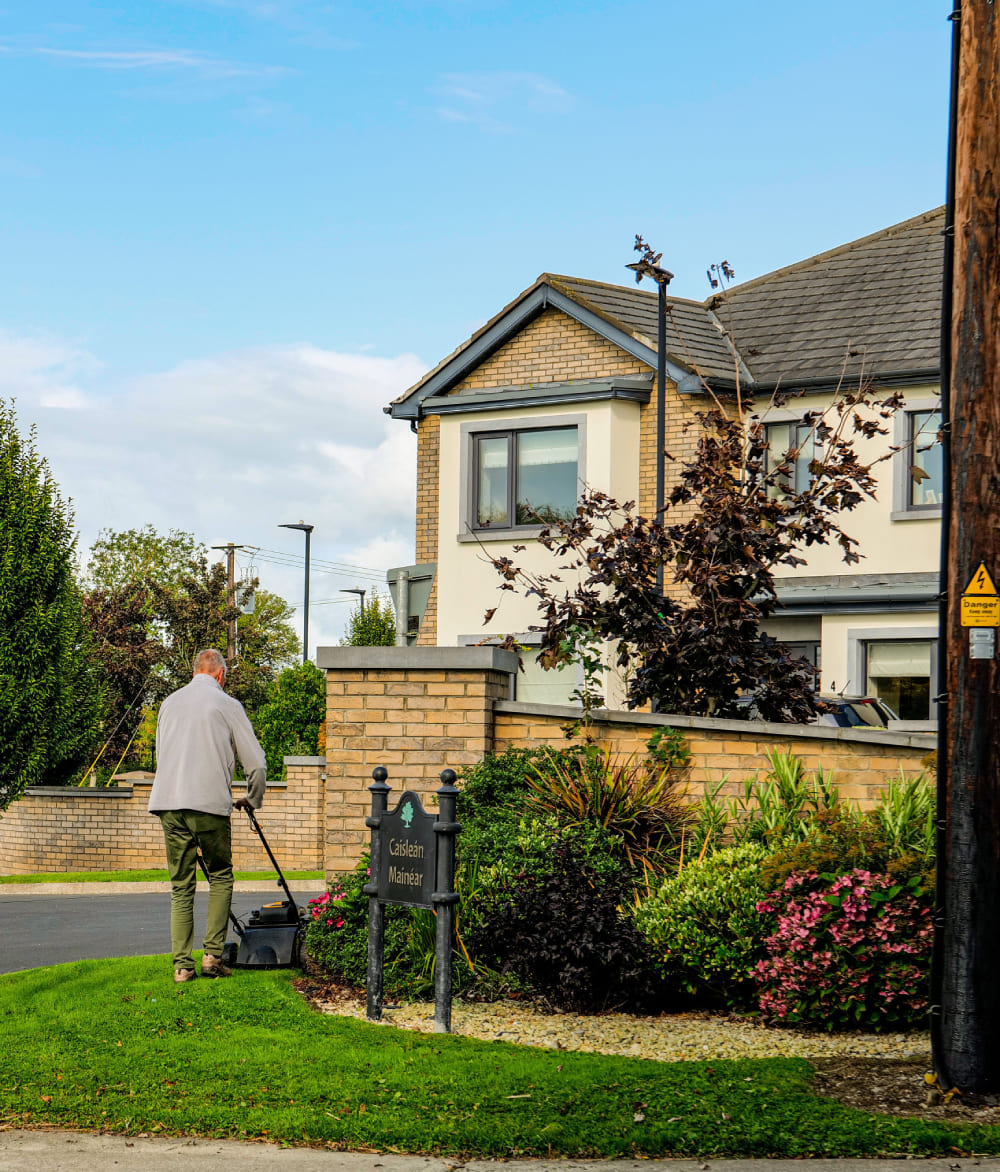
A healthy mowing schedule is based on growth, not only the calendar. During active spring and early-summer growth, many lawns look best with more frequent cutting. During hot, dry or slow-growth periods, the interval can often be longer.
- Watch the grass, not just the date
If the lawn looks shaggy, begins to bend over, or is growing much faster after rain, it may be ready for another cut. Avoid removing too much height at once. Heavy cutting can stress turf, especially when the lawn is already dry or heat-stressed.
- Weather matters
Wet grass can clump, leave an uneven finish and create extra mess on hard surfaces. Very dry lawns may benefit from a slightly higher cutting height so the turf retains more leaf area. After strong growth, a gradual return to the preferred height is usually better than one aggressive cut.
- Weekly or biweekly?
Weekly service is common during periods of strong growth. Some properties are suitable for biweekly service, especially later in the season or when growth is slower. The right schedule also depends on irrigation, soil, shade and how polished you want the property to look.
- Finish matters too
“At Evergreen, we believe sustainable landscaping should never compromise beauty. Drought-tolerant gardens are our way of helping Los Angeles thrive—visually and environmentally. Every space we design reflects our passion for smart, stunning, water-wise solutions.”
John Smith, Owner Tweet

I look forward to seeing how these developments will improve service levels and customer satisfaction in the freight industry!